
Degumming
Crude oil is treated with water or acids (phosphoric/citric) to remove phospholipids (gums). Modern facilities use enzymatic degumming to improve yields and reduce waste.
Enzymatic methods increase yieldOil & Fats Refining
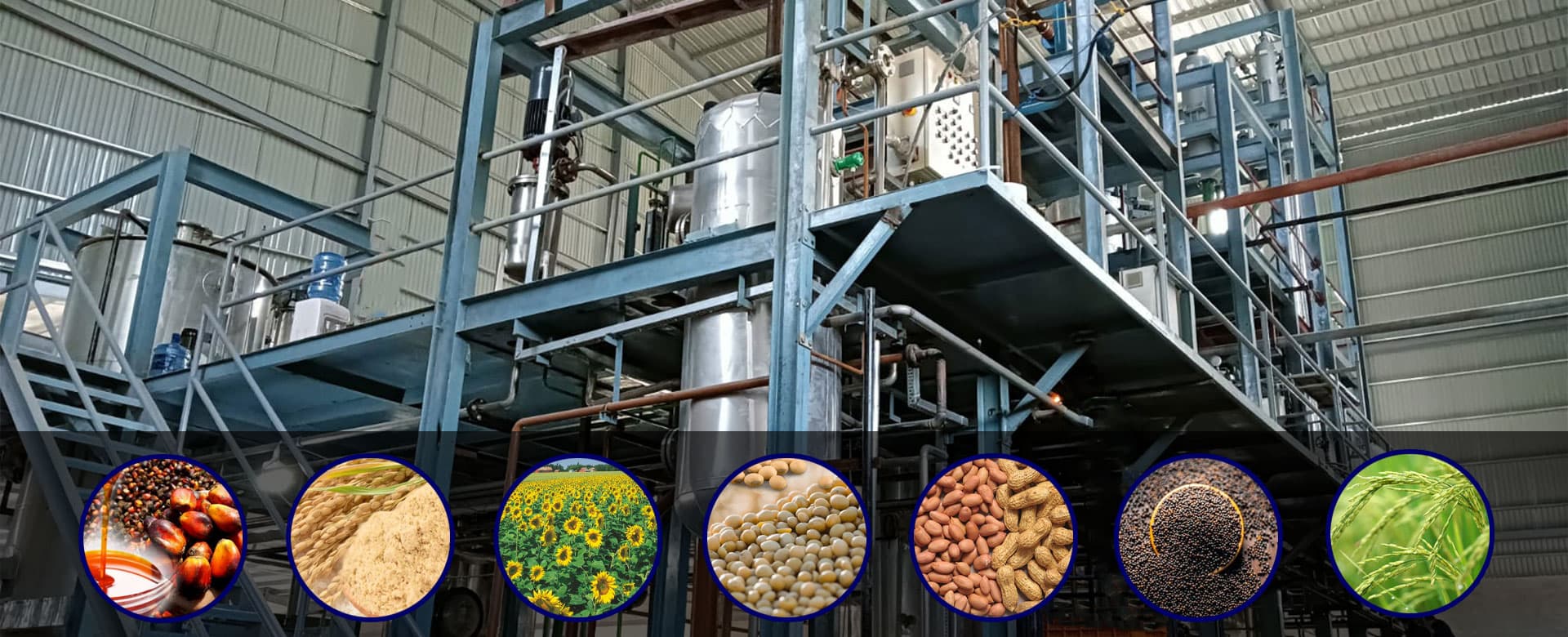
The vegetable oil refining process transforms crude oil extracted from seeds or fruits into a clear, stable, and palatable product suitable for human consumption. As of 2026, the industry emphasizes sustainable, health-focused, and energy-efficient techniques, specifically targeting the reduction of process contaminants like 3-MCPD and Glycidyl Esters (GE).
Crude oil is treated with water or acids (phosphoric/citric) to remove phospholipids (gums). Modern facilities use enzymatic degumming to improve yields and reduce waste.
Enzymatic methods increase yieldChemical refining uses alkali (caustic soda) to neutralize FFAs, forming 'soapstock'. Physical refining bypasses this step, removing FFAs during deodorization.
Chemical vs. Physical approachOil is mixed with activated clay/carbon under vacuum to adsorb pigments, soap traces, and metallic impurities for enhanced clarity.
Adsorption under vacuumEssential for sunflower/corn oils. Cooling crystallizes waxes and saturated fats, which are filtered to ensure low-temperature clarity.
Crystallization & filtrationFinal stage uses high-temperature steam distillation under vacuum (2–4 mbar) to remove volatiles. Low-temperature processes prevent trans-fats and preserve nutrients.
Low-temperature focusIndustry Standards & Best Practices
| Feature | Physical Refining | Chemical Refining |
|---|---|---|
| Primary Advantage | Higher oil yield, eco-friendly, energy-efficient | Strong adaptability for low-quality crude oils |
| FFA Removal | Removed during deodorization via steam distillation | Neutralized using alkali (caustic soda) |
| By-products | Fatty Acid Distillates | Soapstock (for soap manufacturing) |
| Best Suited For |
|
|
Modern refineries implement a comprehensive waste-to-wealth strategy through advanced by-product valorization and energy recovery systems.